

If you follow the AI industry even loosely, you have probably heard the term "AI agents" floating around for the past year or so. Depending on who was talking, it was either the next big thing or another piece of overpromised technology that would not live up to its billing. After this week's Nvidia GTC conference in San Jose, that debate is largely over.
On 16 March 2026, Nvidia CEO Jensen Huang took the stage at what has become the closest thing the AI world has to a Super Bowl moment. His message was pointed: the agentic AI inflection point has arrived. Not is arriving. Has arrived.
That is a significant claim from the most valuable company on earth, and it deserves a plain language explanation of what it actually means for businesses, including ones here in Australia.
What Is an AI Agent, Really?
Most people's experience with AI so far has been conversational. You type a question, you get an answer. You ask for a draft, you get a draft. The AI waits for you, responds, and waits again. That interaction model is useful, but it is fundamentally passive.
An AI agent is different. Rather than responding to a single prompt, an agent can take a goal and work towards it autonomously across multiple steps, using tools, accessing systems, making decisions, and producing outcomes, without you being present for every step of the process.
Think of it this way: asking an AI to write a summary of last month's sales report is a chatbot interaction. Asking an AI to monitor your sales data, spot anomalies, pull the relevant context, draft a summary, and send it to your management team every Monday morning is an agent workflow.
"Every company in the world today needs to have an agentic system strategy. This is the new computer. This is as big of a deal as HTML, as big of a deal as Linux."
Jensen Huang, Nvidia CEO
That quote is worth sitting with. Huang is not comparing AI agents to a useful productivity tool. He is comparing them to the foundational technologies that defined how the entire digital economy was built.
What Nvidia Actually Announced
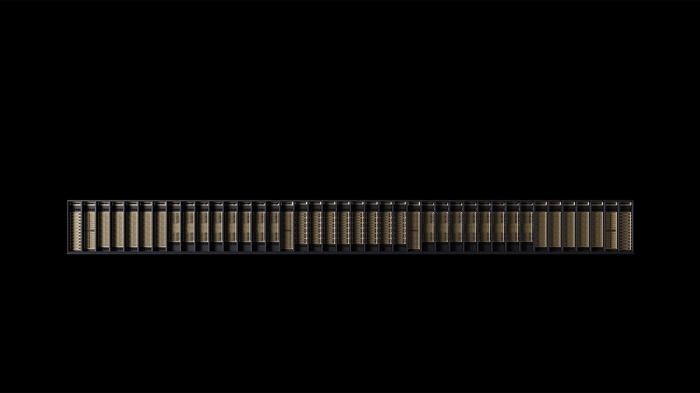
The centrepiece of GTC 2026 was the NVIDIA Vera Rubin platform, a purpose built computing system designed specifically for agentic AI workloads. The platform brings together seven new chips, all in full production, configured to handle every phase of AI, from training and reasoning through to real time agent inference.
A few details worth noting for context:
- The new Vera CPU Rack is built specifically for the kind of computational environments that AI agents need to test and validate decisions, not just generate responses.
- Nvidia struck a $20 billion deal with inference chip maker Groq to integrate their low latency processing into the platform, a clear signal that speed of agent response is now a primary design consideration.
- Anthropic, OpenAI, Meta, and Mistral AI have all publicly committed to using the Vera Rubin platform. When the companies building the AI models are aligning behind the same infrastructure, the direction of travel becomes clear.
- Huang cited $1 trillion in expected Nvidia revenue through 2027, driven primarily by inference demand, which is the compute required to run AI agents in production at scale.
This is not a research announcement. It is a production rollout at massive scale, backed by the biggest names in the industry.
Why This Matters Beyond the Hardware
Infrastructure announcements from chip makers can feel abstract, especially when the numbers involved are in the trillions and the technical specifications are dense. But the real significance of what Nvidia announced is not the chips. It is the signal.
When Nvidia rebuilds its entire product strategy around a new use case, that use case is real. The company does not have a history of chasing trends. It has a history of identifying fundamental shifts in how computation works and building the picks and shovels before the gold rush arrives. It did this with GPUs and deep learning. It is doing it again with AI agents.
The Zoom announcements from earlier this month are consistent with the same trend. Zoom's new agentic AI platform can take a meeting and autonomously turn it into a series of triggered workflows, including drafting follow up emails, updating project tools, and scheduling next steps, without any human in the loop.
These are not features being bolted onto existing software. They are a different approach to how work gets done, built into the software from the ground up.
What This Means for Australian Businesses
It is tempting to read about trillion dollar chip platforms and assume none of this is relevant to a mid sized business in Melbourne or Sydney. That would be a mistake.
The infrastructure developments that Nvidia is announcing today make it cheaper and faster to run AI agents. That cost curve comes down over time and flows through to the tools and platforms businesses use every day. What costs enterprise scale budgets today will be accessible to small and medium businesses within 12 to 24 months. That is the historical pattern with every technology infrastructure shift, and there is no reason to expect this one to be different.
The window to prepare is now
Businesses that wait until AI agents are everywhere to start thinking about how they will use them will be behind. The companies getting the most out of this technology are the ones who are mapping their processes now, identifying where autonomous action could replace manual steps, and building the foundations for integration before they need it urgently.
You do not need to deploy an AI agent today. But you should be able to answer the question: which parts of our operation involve repetitive, rule based decisions that a system could handle without a human touching every instance?
Agent strategies require clean data and connected systems
Agents are only as good as the systems they can access. If your CRM, your email, your project management tools, and your finance software all sit in silos with no integration, deploying an agent that spans those systems is significantly harder. One of the most practical things businesses can do right now is audit their tool stack and identify where the gaps and disconnections are.
Governance and oversight are not optional
Autonomous AI doing work on your behalf raises real questions. What does it have access to? Who reviews its outputs? What happens when it makes a mistake? These are not hypothetical concerns to worry about later. They are design decisions that need to be built into any agent deployment from the start.
Huang specifically addressed this at GTC, noting that Nvidia's tools for the OpenClaw agent platform include privacy and security controls designed for enterprise environments. The industry is aware that governance is a prerequisite for adoption, not an afterthought.
Not every task should be automated
The excitement around agents can lead businesses to want to automate everything. That is rarely the right approach. The best agent deployments are highly targeted. They handle specific, well defined tasks where the inputs are predictable, the decision criteria are clear, and the outputs can be verified. Trying to automate ambiguous or judgment heavy work through agents tends to produce inconsistent results and erodes trust in the technology.
A Practical Way to Think About It
The clearest framing we have heard for where AI agents sit in the business context is this: a chatbot answers your question, an agent gets the job done.
If your business is using AI today mainly for writing assistance, summarisation, or answering internal questions, you are using it as a chatbot. That is valuable. But it is not what the next wave of AI capability is about.
The next wave involves AI that can handle the low level administrative and operational work that currently fills up your team's time. Scheduling. Follow ups. Monitoring. Routing. Classification. Drafting and sending standard communications. Processing and categorising incoming documents. Running checks and generating reports on a schedule. These are all candidates for agent automation, and the tools to do it are mature enough right now that businesses should be actively trialling them.
Where Logic8 Sits on This
We have been building and deploying workflow automations for clients across Australia, the UK, and Europe for years. Agentic AI is a natural extension of that work, and it is something we are actively integrating into the solutions we build.
The tools we work with every day, including n8n, Make, and the AI APIs from Anthropic and OpenAI, are all moving in this direction. Building agent workflows is not theoretical for us. It is happening in production, for real clients, solving real business problems.
What has changed this week is the scale of the infrastructure bet behind agentic AI. When Nvidia, the most valuable company in the world, rebuilds its product roadmap around AI agents and the leaders of OpenAI and Anthropic stand on stage to endorse it, the conversation has shifted from "will this happen?" to "how fast?"
If you want to talk through what an agent strategy might look like for your business, we are happy to have that conversation.
Ready to explore AI agents for your business?
We help Australian businesses move from curiosity to practical deployment. Book a free consultation and let us walk you through what is actually possible right now.
Book a Free Consultation